Artificial reefs on Koh Tao are changing the way divers experience the island, and they’re playing an increasingly important role in Thailand’s reef restoration projects as the impact of climate change on coral reefs becomes impossible to ignore.
Koh Tao may be small, but it has become a hub for marine innovation. Alongside its famous natural reefs, whale shark encounters, and world-class diver training, the island is home to a growing network of carefully designed artificial reef structures. These sites are built not only to create exciting dive locations but to support coral recovery, reduce stress on natural reefs, and help protect marine ecosystems for the future.
Unlike the old idea of sinking random objects and hoping for the best, modern artificial reefs on Koh Tao are planned, monitored, and maintained as part of long-term artificial reef conservation efforts. They provide new surfaces for coral growth, safe habitats for marine life, and hands-on learning opportunities for divers who want to learn about coral restoration while still enjoying memorable dives.
In this guide, we’ll explore how artificial reefs on Koh Tao are built, why reef restoration projects matter in a changing climate, and where you can dive these unique sites on your next visit.
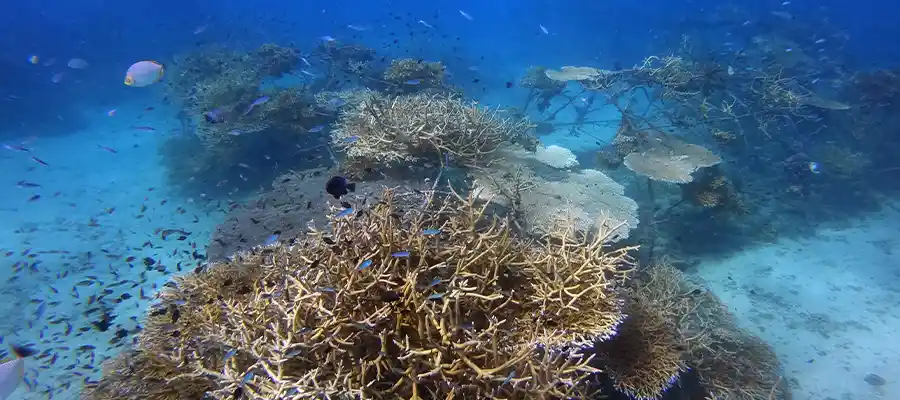
Why Artificial Reefs on Koh Tao Matter for Reef Restoration Projects
Koh Tao’s natural reefs are rich, diverse, and central to the island’s identity, but like coral reefs worldwide, they are under increasing pressure. The impact of climate change on coral reefs, combined with storm damage, fishing activity, and heavy tourism, has made reef protection and recovery more important than ever.
Artificial reefs on Koh Tao play a key role in marine conservation by supporting reef restoration projects that work alongside natural ecosystems rather than replacing them. By creating alternative dive sites, they help reduce pressure on popular natural reefs, allowing damaged areas time to recover while still offering divers rewarding underwater experiences.
These structures also provide new habitats for marine life and stable surfaces for coral fragments to attach and grow. This is especially valuable after bleaching events or strong storms, when natural reef frameworks may struggle to regenerate. For divers, artificial reefs offer an added benefit: shallow, controlled environments that make ideal training and conservation sites, helping people learn about coral restoration without risking fragile coral colonies.
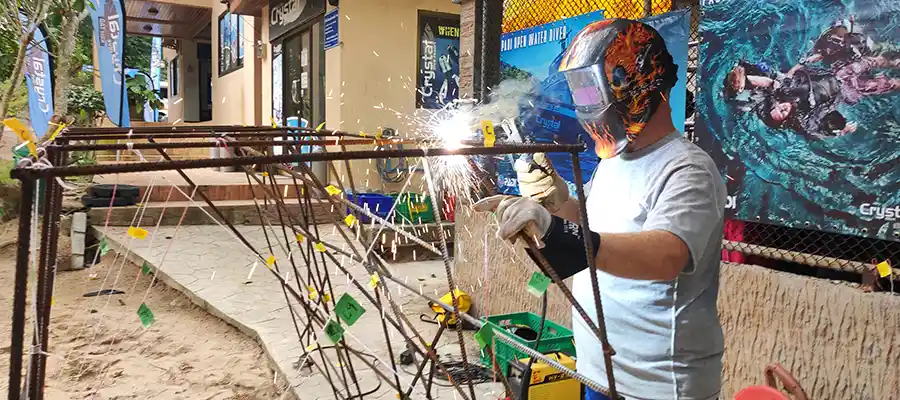
How Artificial Reefs on Koh Tao Support Artificial Reef Conservation
Building artificial reefs on Koh Tao is a carefully planned process guided by science, safety, and long-term conservation goals. These projects are not about dumping materials into the ocean. They are designed to actively support artificial reef conservation and marine ecosystem recovery.
Site planning comes first. Conservation groups and dive centres work with Thailand’s Department of Marine and Coastal Resources (DMCR) to select stable seabeds at appropriate depths, positioned far enough from natural reefs to avoid damage while remaining accessible for divers and monitoring teams.
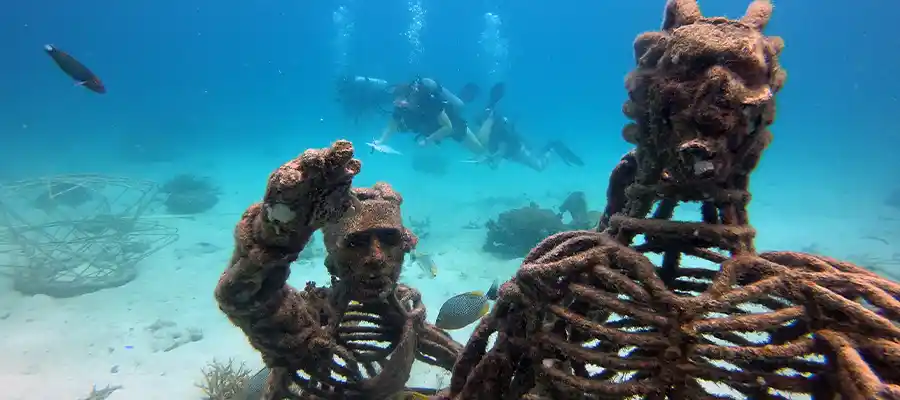
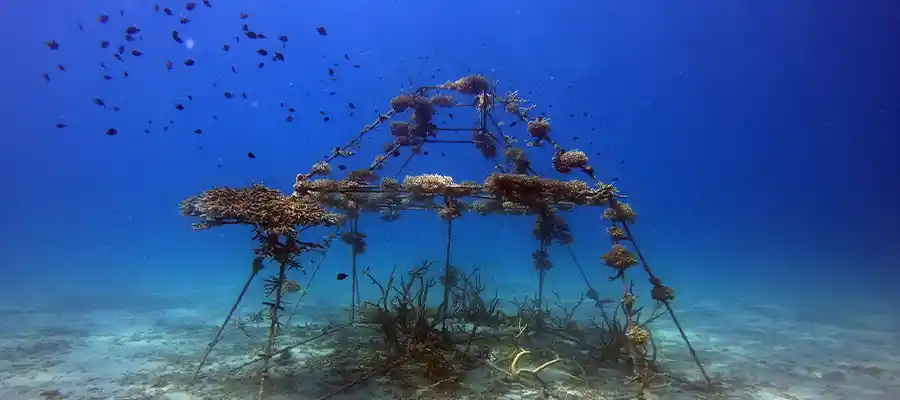
Structure design is equally important. Most artificial reefs on Koh Tao are made from concrete, steel, or purpose-built eco-friendly materials. Concrete is commonly used because it is durable, heavy enough to remain stable during storms, and has a rough surface that encourages coral attachment. Designs range from domes and cubes to pyramids and themed structures created specifically for coral growth and fish shelter.
Deployment involves carefully lowering the structures into position using boats, lift bags, and divers. Placement is planned to promote good water flow, create safe swim-throughs, and ensure long-term stability.
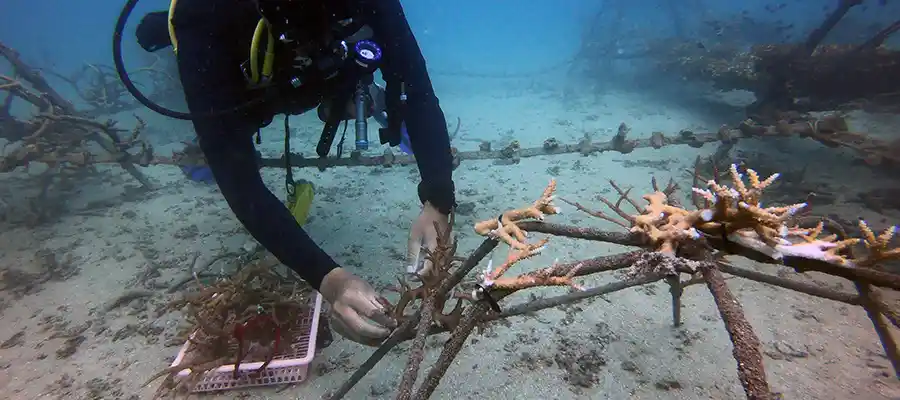
Coral transplanting follows, using fragments that have naturally broken off due to storms or other disturbances. These fragments are secured using marine epoxy, cement, or ties, allowing them to grow and spread over time. Because timing and technique matter, coral restoration work in Thailand requires specialised training and legal approval.
Finally, monitoring ensures long-term success. Conservation teams regularly record coral growth, fish populations, and structural stability, contributing data to international marine research databases.
Artificial reefs are living coral restoration projects, constantly adapting to ocean conditions.
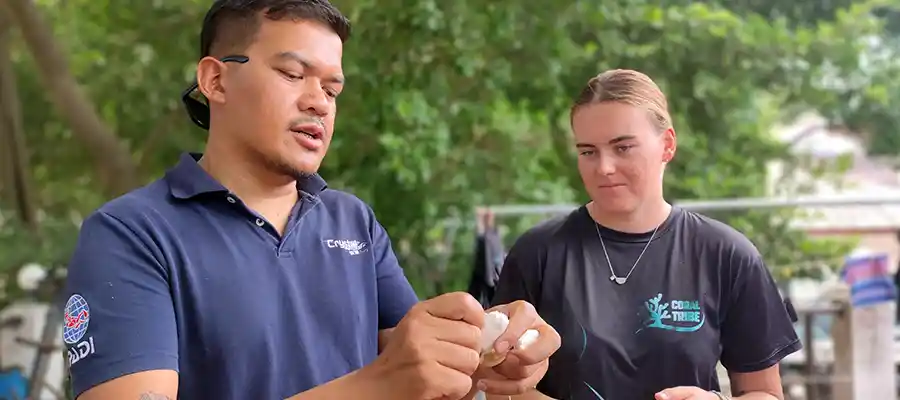
Artificial Reef Conservation on Koh Tao and Coral Restoration Efforts
Koh Tao has developed a strong conservation culture, with local organisations and dive centres actively supporting artificial reef conservation and coral restoration projects. These initiatives focus not only on building reefs, but also on education and community involvement.
Divers are encouraged to understand how reef ecosystems function, why they are vulnerable, and how responsible human intervention can help offset the impact of climate change on coral reefs.
Many dive centres (including Crystal Dive) offer eco-focused activities where participants can assist with reef monitoring or learn about coral restoration techniques under professional supervision.
This hands-on approach transforms divers from passive observers into informed advocates. By understanding the challenges reefs face and the science behind restoration, visitors leave Koh Tao with a deeper appreciation of marine conservation and their role in protecting ocean ecosystems.
Marine Conservation Courses on Koh Tao: Learn About Coral Restoration Firsthand
Marine conservation doesn’t stop at observation. For divers who want to actively contribute, Crystal Dive offers structured learning pathways through dedicated marine conservation courses. These programmes are designed to deepen understanding of reef ecology, the impact of climate change on coral reefs, and the science behind reef restoration projects.
By combining classroom sessions with practical, in-water experience, students gain hands-on exposure to coral restoration techniques, reef monitoring methods, and responsible conservation practices.
These courses provide a meaningful way to move from recreational diving into informed participation in artificial reef conservation efforts.
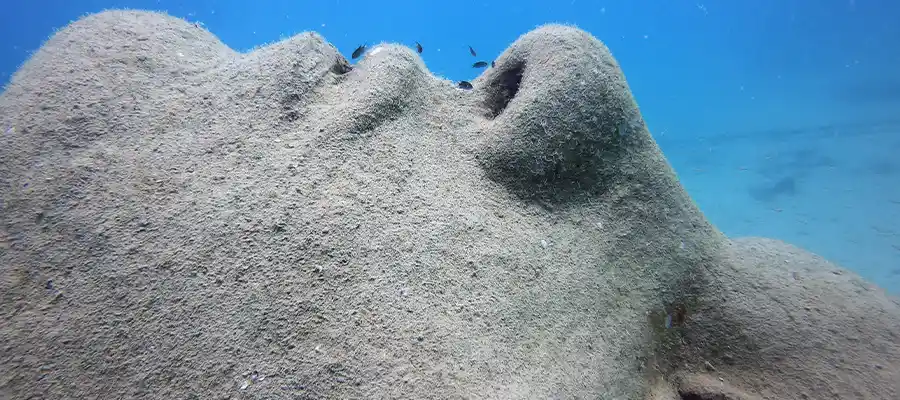
Dive Artificial Reefs on Koh Tao and Learn About Coral Restoration
Several artificial reefs on Koh Tao are perfect sites for a wide range of experience levels, from beginner divers to seasoned underwater explorers.
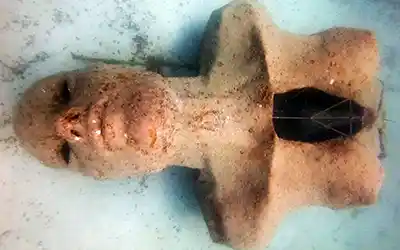
Buoyancy World is one of the island’s most well-known artificial reefs. Located near the Twins dive site, it was designed as a training environment where divers can practise buoyancy skills without damaging natural coral. Concrete cubes, domes, and sculptures provide shelter for fish while supporting coral growth.
Junkyard Reef is a shallow site built from eco-friendly concrete structures and purpose-sunk objects designed for coral attachment. Its creative layout supports thriving marine life and makes it ideal for both training dives and relaxed fun dives, while demonstrating reef restoration projects in action.
Coral nurseries at bays such as Aow Leuk and Mango Bay showcase early-stage restoration work. Coral fragments are grown on frames before being transplanted to larger reef structures, allowing snorkelers and entry-level divers to learn about coral restoration up close.
Hin Fai (BioRock) uses low-voltage electrical currents to encourage coral growth on metal structures. This innovative approach has been shown to accelerate coral growth and improve resilience to bleaching, offering divers a unique look at technology-driven coral reef restoration.
What You’ll See on Reef Restoration Projects in Action
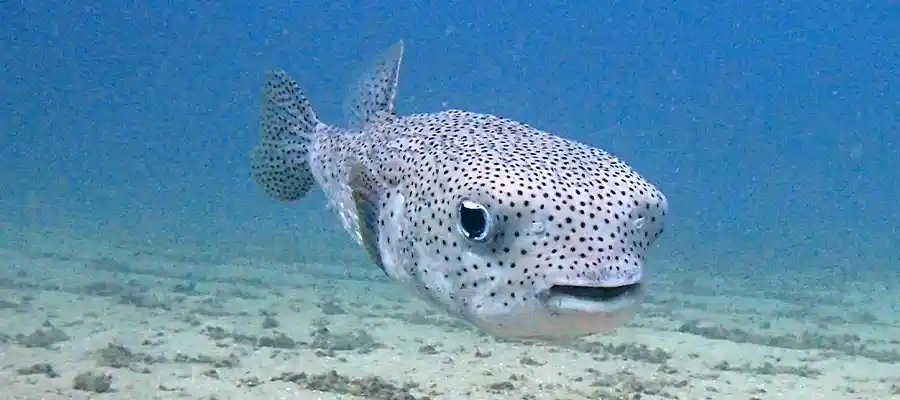
Artificial reefs on Koh Tao quickly become vibrant marine habitats. Within months, algae and sponges colonise the structures, followed by coral growth and increasing fish populations.
Common sightings include schools of snapper and fusiliers, juvenile sweetlips, lionfish sheltering in crevices, anemones with resident clownfish, and a wide variety of nudibranchs. Over time, many artificial reefs become so rich in marine life that they closely resemble nearby natural reefs.
For divers, this progression offers a rare chance to witness reef restoration projects developing in real time.
Diving Artificial Reefs on Koh Tao Responsibly to Protect Coral Restoration Projects
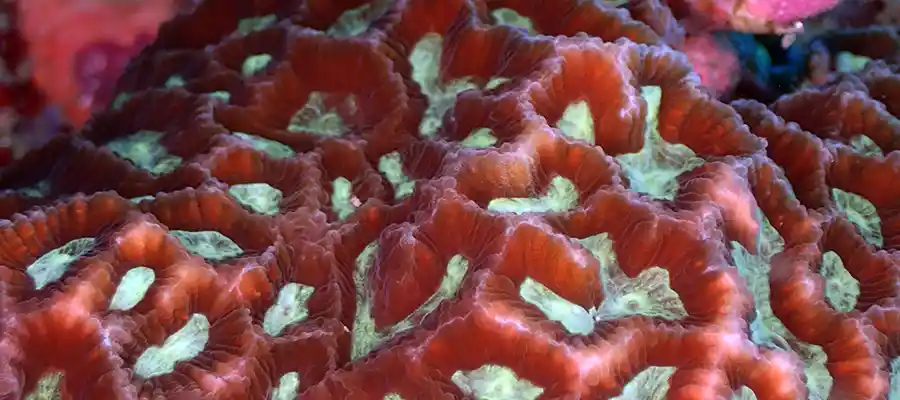
Artificial reefs on Koh Tao deserve the same respect as natural ones. Good buoyancy control is essential, and divers should avoid touching structures or corals, as even small impacts can damage growing colonies.
In Thailand, disturbing coral is illegal and carries serious penalties.
Following dive briefings, respecting no-touch policies, and leaving marine life undisturbed ensures that artificial reef conservation efforts remain successful. Responsible diving directly contributes to the long-term health of these sites.
Working With The Coral Tribe: Supporting Artificial Reef Conservation on Koh Tao
Effective reef restoration relies on collaboration. We’re proud to work alongside The Coral Tribe, a Koh Tao–based marine conservation organisation focused on coral restoration projects, reef monitoring, and environmental education. Their work supports many of the artificial reef conservation initiatives around the island, helping ensure projects are guided by science and long-term sustainability.
Through this partnership, divers and students benefit from up-to-date conservation practices and the opportunity to support projects that directly address the impact of climate change on coral reefs. It’s a shared commitment to protecting Koh Tao’s marine ecosystems while educating the next generation of ocean stewards.
The Bigger Picture: How Artificial Reefs on Koh Tao Help Protect Coral Reefs from Climate Change
Artificial reefs on Koh Tao demonstrate how thoughtful human intervention can help counterbalance the impact of climate change on coral reefs. While they are not a replacement for natural reefs, they play an important supporting role by reducing pressure, accelerating recovery, and educating the next generation of ocean stewards.
By combining conservation science with diver education, reef restoration projects on Koh Tao show that exploration and protection do not have to be at odds. Each artificial reef represents a commitment to safeguarding marine ecosystems in a changing ocean.