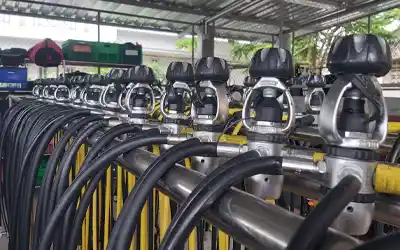
We owe our ability to explore the underwater world so freely to the evolution of dive equipment, from the early and often primitive, homemade gear to the highly innovative equipment systems that divers use today. And the history of diving equipment is a story that’s almost as exciting as a dive itself. Scuba gear evolution has been driven forward by wave after wave of innovative explorers and their groundbreaking ideas. It’s because of these adventurers, and the inventive ones still to come, that modern scuba equipment is safe and accessible.
So let’s jump into the story of how dive equipment has become what it is today.
Early Experiments Drive the History of Diving Equipment
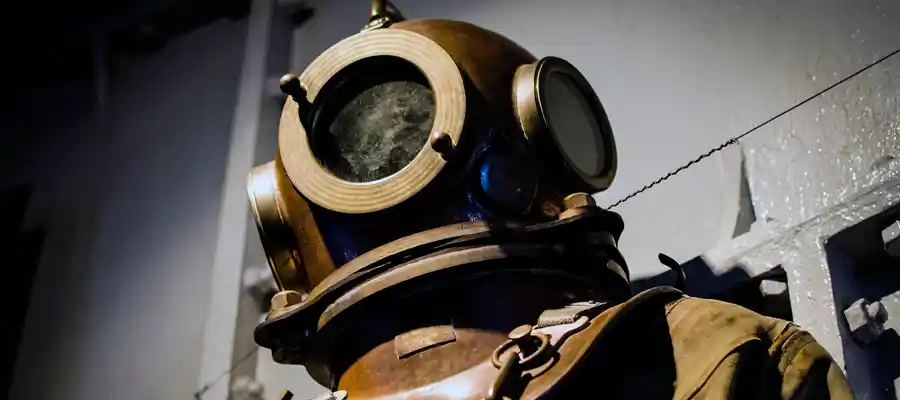
Well before modern scuba equipment, curious divers were always finding (sometimes crazy) ways to spend more time beneath the waves. Extremely early explorers used simple tools like hollow reeds and breathing tubes to survive underwater. Later, diving bells allowed divers to take a supply of trapped air with them under the surface. By the time we get to the 17th and 18th centuries, big improvements were being made to diving bells, like trips underwater becoming longer because of the addition of air pumps.
But it was the 19th century that really started a push in scuba gear evolution. Suddenly, diving helmets and surface-supplied air systems were allowing divers to go deeper, while inventors were experimenting with compressed air tanks and rudimentary versions of the self-contained breathing apparatus. During the 1860’s, two French engineers, Benoît Rouquayrol and Auguste Denayrouze, developed an early version of a demand regulator that would supply air when a diver inhaled, laying extremely important groundwork for the scuba gear we use today.
At the same time, other approaches to diving equipment were also starting to emerge. New closed-circuit rebreathers gave divers the option of recycling their breathing gas, while Yves Le Prieur was busy developing an open-circuit system using compressed air and a regulator. These early inventions were definitely not lightweight or reliable, but each experiment added to the evolution of dive equipment over the course of history.
Aqua-Lung Marks a Turning Point in the Evolution of Dive Equipment
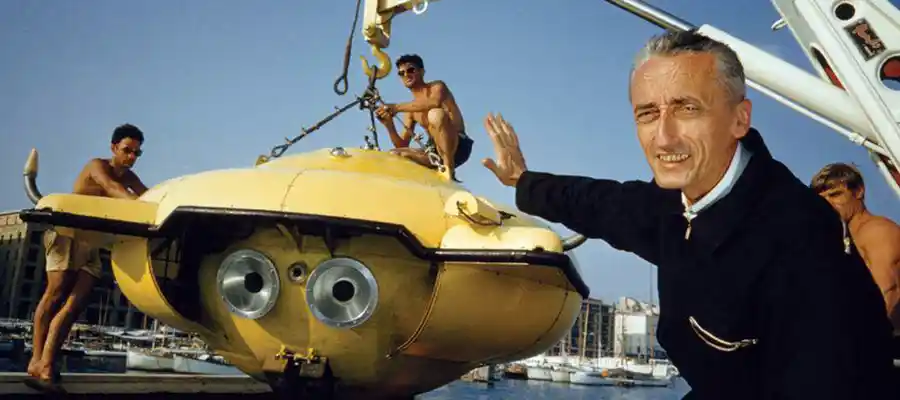
In 1943, Jacques Cousteau and Émilie Gagnan wondered what would happen if they combined a high-pressure air supply with a demand regulator. The result was the Aqua Lung, a regulator that delivered air only when a diver inhaled and allowed divers to get rid of the surface air hose so that they could move freely underwater.
After patenting, the Aqua Lung moved quickly from being something experimental to gear that was being commercially produced. La Spirotechnique also began manufacturing gear in 1946, which really accelerated the accessibility of recreational diving. This was a huge turning point in the history of diving equipment, and it set the stage for decade after decade of scuba diving innovations.
The more people wanted to go diving, the more manufacturers refined almost every single part of a diver’s gear setup. Regulators kept getting smaller and more efficient, pressure gauges hit the scene to make it easier to manage air supplies, and fins, exposure suits, and buoyancy control equipment made some big leaps forward.
Scuba diving gear was rapidly becoming more comfortable, more reliable, and more practical.
Innovation Shapes the Scuba Gear Evolution
Once more practical and reliable scuba gear became available to the masses, innovation moved in quickly. Companies began refining scuba equipment to make diving safer, more comfortable, and really just easier to manage overall.
Regulators Become Smaller and More Reliable
The first scuba regulators were really bulky compared with the streamlined ones we see hanging in dive shops these days. Big advances in materials and engineering allowed the production of smaller and lighter regulators with highly improved breathing performance. Alternate air source regulators (an octopus) were also starting to be introduced.
Fins and Masks Improve Comfort and Movement
Heavy rubber fins finally started to disappear in favour of lighter designs made from modern plastics and composite materials. The arrival of different fin blade shapes and stiffness levels started to open the door to divers being able to pick fins best suited to their kicking style and diving environment. Masks weren’t left behind. They evolved from simple, basic designs to comfortable and slim models often available in different sizes, shapes, and even prescription options.
Buoyancy Control Becomes Part of the System
Early scuba divers were really limited in ways to control their buoyancy underwater. Modern BCDs (buoyancy control device or buoyancy compensator) let divers add or release air while they’re underwater, which makes it much easier to get into a comfortable diving position and safely control ascents and descents. This was a big leap for comfort and buoyancy management, but also for overall dive safety.
Exposure Protection Keeps Divers Comfortable
Lightweight neoprene wetsuits gradually replaced heavy rubber diving suits, giving divers greater environmental protection with less weight and bulk. The evolution of dive wetsuits continues to rapidly evolve, with different thicknesses, specialized designs, and innovative fabrics giving divers a huge array of choices for different ranges of water temperatures and diving conditions. There are even companies that are now starting to get playful with the colours and prints so that divers can express themselves underwater and stand out from a group.
Gauges Give Divers More Information
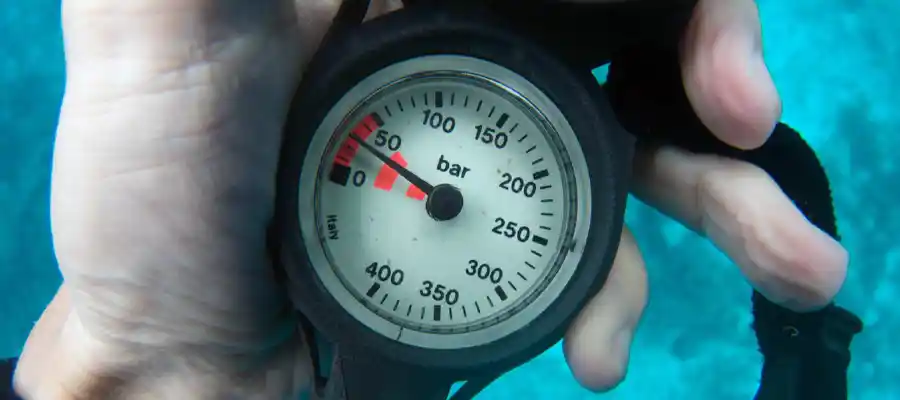
With early scuba diving equipment, there really was no good way to monitor depth and remaining air supply. But the invention of submersible pressure gauges changed all of that. These new gauges and consoles gave divers the ability to monitor all the super important details during a dive.
Technology Transforms Modern Scuba Equipment
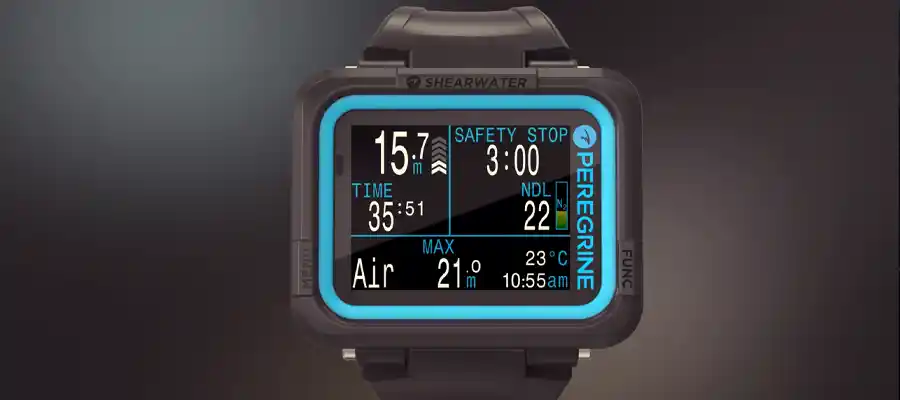
Today’s modern scuba equipment doesn’t look much like the gear used by the very first recreational divers. And we’re thankful it doesn’t! Digital technology has really started to transform the way divers can monitor their dives, like dive computers that combine depth, time, decompression information, a compass, and an air integration function all in a single device.
Scuba diving equipment has also become quite specialized. Technical divers can use sidemount systems with multiple cylinders and advanced regulators for super challenging environments, while closed-circuit rebreathers recycle breathing gas and produce no bubbles (which might be handy when diving in a cave environment).
Equipment is constantly getting more capable without getting more complicated, through lighter materials, improved designs and ergonomics, and highly sophisticated electronics.
The result of all of this innovation is an absolutely enormous range of diving equipment designed for different dive environments and diving styles. Whether exploring a tropical reef with a recreational setup or exploring the depths of a cave with specialized technical equipment, divers of today have the luxury of choosing the perfect gear to support their diving. Something that would have been completely unimaginable to the first pioneers of underwater exploration.
What Does the Future Hold for Dive Equipment?
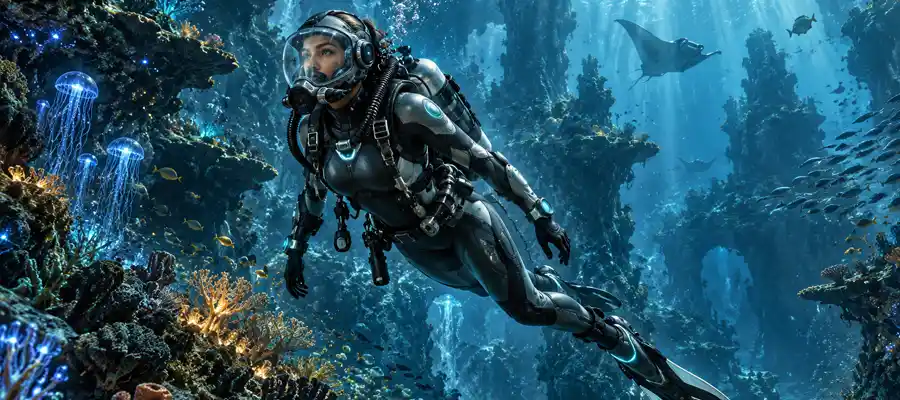
The evolution of dive equipment has always been (and probably will always be) driven by the desire to make scuba diving safe, more accessible, and more rewarding overall. As we see even more advancements in materials, electronics, and engineering, gear may continue to change dramatically.
Whatever may come next in the history of diving equipment, the spirit of innovation that helped to shape modern scuba equipment is unlikely to change. The incredible advancements in gear made so far leave plenty of room for us to imagine what incredible equipment choices scuba gear evolution has for us next.