Planning your first dive often brings up a simple question: Do you need to improve swimming before scuba diving?
The short, honest answer is maybe. You do need to know how to swim to scuba dive, but the level required is much lower than most people expect.
Scuba diving is not about fast swimming, strong strokes, or athletic performance. It’s about being calm and comfortable in the water. During a certification course, you’ll be asked to complete a short swim and demonstrate that you can float or tread water for a set amount of time. These are not timed, competitive tests — they simply confirm that you’re safe and relaxed in the water.
If you’re comfortable moving yourself through water at a slow, steady pace and can remain calm while floating, you already have the foundation needed to start scuba diving.
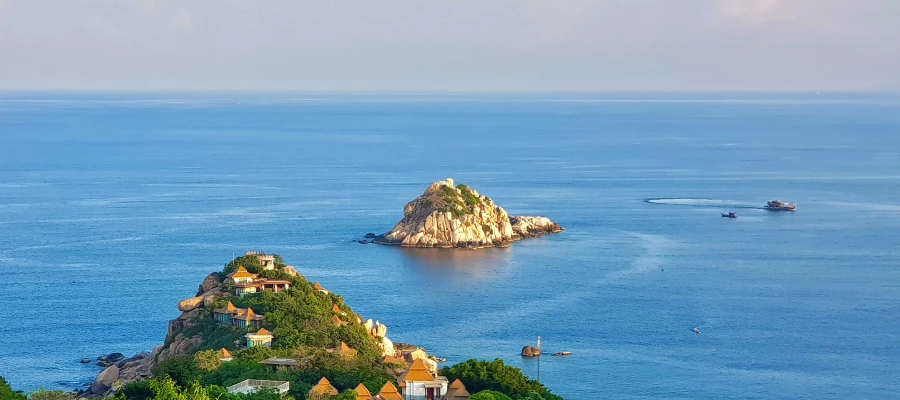
Can You Scuba Dive If You’re Not a Strong Swimmer?
Can you scuba dive if you’re not a strong swimmer? Yes, in many cases, you absolutely can.
If you’re not confident in your swimming ability, introductory “try dive” programs, like SSI’s Basic Diver, allow you to experience scuba diving in shallow, controlled conditions under direct supervision. These programs focus on breathing, buoyancy, and comfort, not swimming distance or technique, and they’re designed specifically for beginners.
If your goal is to become a certified diver, basic swimming ability is required, but “not a strong swimmer” does not mean “not capable.” Many certified divers were nervous or inexperienced swimmers when they started. With a bit of preparation and confidence-building, most people can comfortably meet the requirements.
If that sounds like you, the tips below focus on improving comfort and confidence, instead of turning you into an athlete.
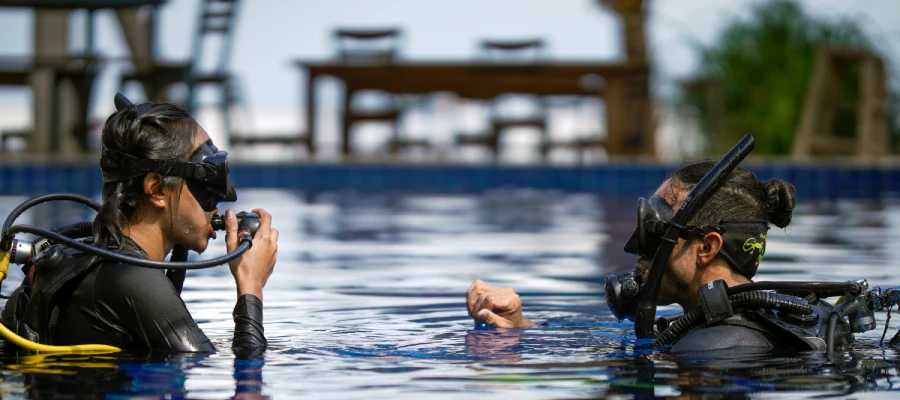
9 Smart Ways to Improve Swimming Before Scuba Diving
Improving your swimming before scuba diving isn’t about speed, strength, or perfect technique. It’s about feeling relaxed, confident, and in control in the water.
These practical swimming tips for scuba diving are designed to help you prepare comfortably and safely, whether you’re learning how to swim to scuba dive or simply want to feel more at ease in the ocean.
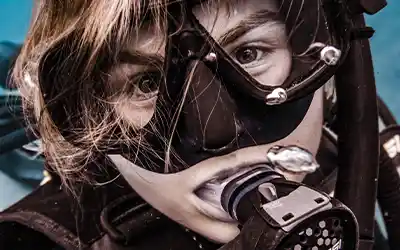
1. Practice Swimming With a Mask and Snorkel
Breathing through a snorkel feels unfamiliar at first, but regular practice builds comfort fast. Snorkelling in shallow water helps you:
- Get used to breathing with your face submerged
- Learn how to clear water from your mask
- Stay relaxed while floating or finning
This is one of the most effective ways to improve swimming before scuba diving, because it closely mirrors how you’ll breathe and move underwater as a diver.
2. Learn to Float and Relax in the Water
Floating is not about strength; it’s about trust. Being able to float calmly on your back builds water confidence and reduces panic if you ever feel tired or overwhelmed.
Practice floating by:
- Lying on your back
- Spreading your arms and legs slightly
- Breathing slowly and deeply
This skill is especially helpful during surface swims and is one of the most overlooked swimming tips for scuba diving.
3. Focus on Endurance, Not Speed
Scuba diving swim tests are not the Olympics. No one cares what you look like or what place you take. What matters is your ability to keep going without stress.
To build endurance:
- Swim slowly using relaxed strokes
- Take breaks when needed
- Focus on steady breathing rather than speed
Endurance-based swimming is one of the best ways to improve swimming before scuba diving without feeling like you’re “training.”
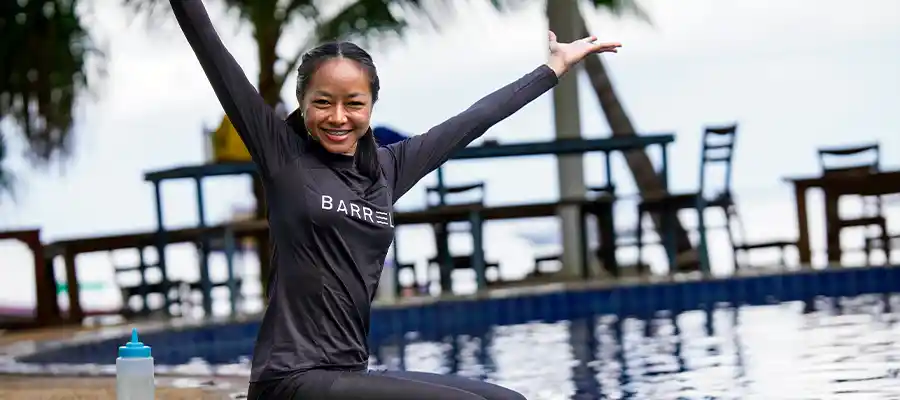
4. Use Fins to Build Confidence and Body Position
Fins make learning how to swim for scuba diving and more efficient, which is why divers use them. Practising with fins:
- Helps you maintain a horizontal body position
- Reduces effort and fatigue
- Builds familiarity with how divers move underwater
Using fins early on can make swimming feel less intimidating and more enjoyable.
5. Practice Treading Water Comfortably
Treading water is often part of scuba certification and is essential for surface safety. Instead of just kicking frantically, focus on:
- Staying upright
- Using slow, controlled movements
- Keeping your breathing calm
The goal is comfort and improving swimming for scuba diving. This skill alone can dramatically boost confidence before your first scuba diving course.
6. Get Comfortable in Open Water, Not Just Pools
Pools are great for technique, but the ocean feels different. Gentle exposure to open water helps you adapt to:
- Mild waves or movement
- Saltwater buoyancy
- Wearing a mask and fins in natural conditions
Calm bays and shallow beaches are ideal places to practise how to swim to scuba dive in a realistic environment.

7. Take a Few Targeted Swimming Lessons
You don’t need months of training to learn how to swim to scuba dive. Even one or two focused lessons can:
- Improve breathing control
- Correct inefficient movements
- Build confidence quickly
If you’re feeling unsure, short-term coaching is one of the fastest ways to improve swimming before scuba diving without pressure or feeling overwhelmed.
If you’re already here on Koh Tao, try our friends at Koh Tao Swim. They’re the number one choice for swimming lessons on Koh Tao.
8. Work on Calm Breathing in the Water
Breathing control is more important than stroke technique for scuba diving. To improve swimming before scuba diving, practise:
- Slow inhales through your mouth
- Long, relaxed exhales
- Staying calm when water splashes your face
This directly translates to scuba breathing and helps reduce your anxiety both on the surface and underwater.
9. Build Confidence Gradually (No Rushing)
The most important tip of all: improve at your own pace. Confidence grows through repetition, not pressure. Small improvements like floating longer, swimming farther, breathing more calmly, they add up quickly.
If your goal is to improve swimming before scuba diving, consistency and comfort matter far more than pushing yourself too hard.
Learn to Dive on Koh Tao (Beginner-Friendly & Supportive)
Koh Tao is one of the most popular places in the world to learn scuba diving, and it’s especially well-suited to beginners who may still be building confidence in the water. Calm seas, warm temperatures, and shallow bays create an ideal environment for anyone learning new skills, both swimming and diving.
At Crystal Dive, many students arrive with concerns about their swimming ability. Some are actively working to improve swimming before scuba diving, while others are simply unsure whether they know how to swim to scuba dive safely. Our instructors are experienced in working with nervous swimmers and first-time divers, and training is always paced to your comfort level.
If you’re worried about whether you can scuba dive if you’re not a strong swimmer, Koh Tao is one of the best places to find out. Introductory programs allow you to experience breathing underwater in a controlled setting, while certification courses include clear guidance, swimming tips for scuba diving, and support to help you succeed.
With the right preparation, mindset, and instruction, scuba diving is accessible to far more people than most realise, and Koh Tao is a great place to take that first step.