Dive with Whale Sharks: Ethical Whale Shark Diving Around Koh Tao
There are a few moments underwater that stay with you forever. Hearing your own breath, feeling weightless, and whale shark sightings. For many divers, to dive with a whale shark is the ultimate experience.
At Crystal Dive, we’re fortunate to share our home waters around Koh Tao with these majestic animals. For many divers, a dive with whale sharks is the ultimate experience, a blend of awe, respect, and sheer wonder.
In this guide, we’ll explore what makes whale shark diving around Koh Tao so unique, reveal what science tells us about their behaviour, explain the whale shark season in Thailand, and show how each diver can play a role in protecting them by practicing ethical whale shark diving.
What Makes Whale Shark Diving Around Koh Tao So Special?
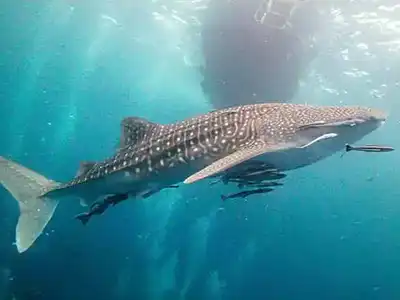
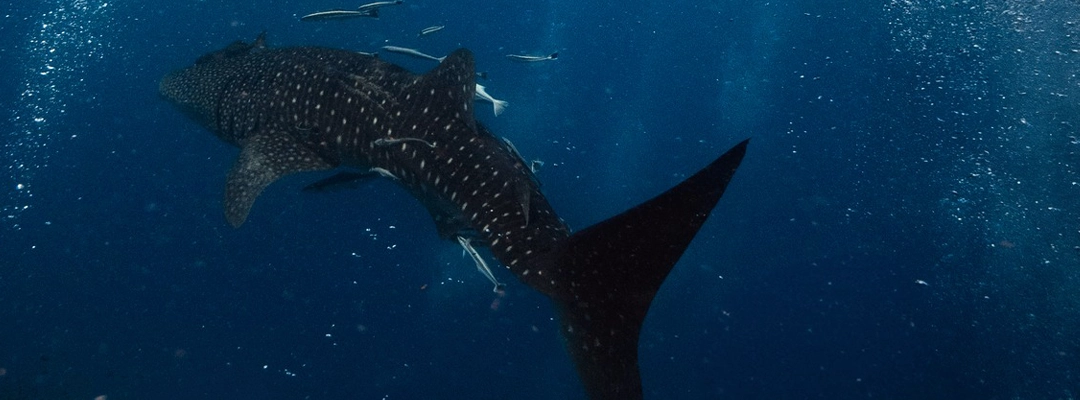
Koh Tao’s location in the Gulf of Thailand places us right in the migration corridor of one of the ocean’s most fascinating species — the whale shark (Rhincodon typus). As the largest fish in the sea, these filter-feeding giants can grow to more than 12 metres in length, yet they remain completely harmless to humans.
Every year, our island welcomes these seasonal visitors who excite divers from all over the world. But what makes whale shark diving around Koh Tao truly special is not just the sighting itself. It’s that the environment here makes those encounters possible.
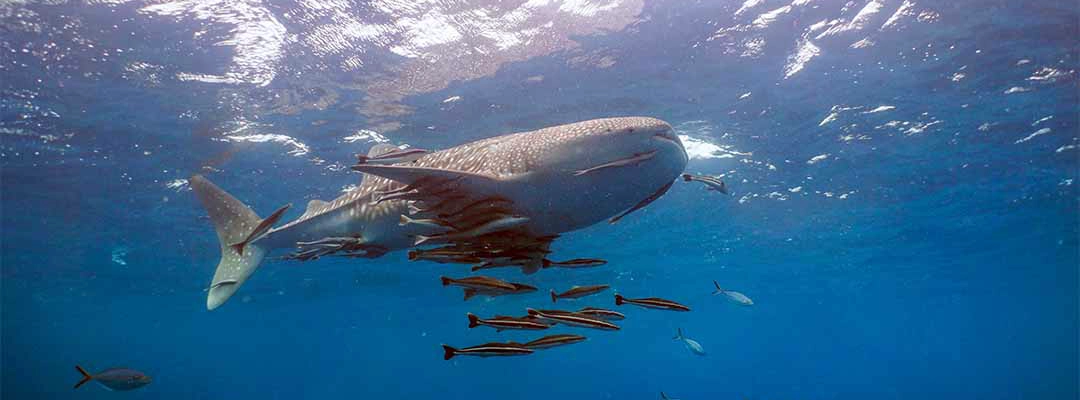
The waters surrounding the island are warm, nutrient-rich, and full of life. Our pinnacles, such as Chumphon Pinnacle, Southwest Pinnacle, Sail Rock, and Hin Wong Pinnacle, rise dramatically from deep blue depths and create perfect up-currents that bring plankton to the surface. That food supply attracts smaller schooling fish, which in turn draw in the world’s largest filter feeder.
Koh Tao’s compact size also means we can reach these dive sites within a short boat ride, giving divers several chances to have whale shark encounters during a single trip. Whether you’re here for a day or a month, every dive carries the potential for that magical sighting.
Whale Shark Behavior and Feeding Habits
Whale sharks are often described as gentle giants, but behind that calm appearance lies one of nature’s most efficient feeding machines. Understanding their behaviour helps us predict where they will go if we happen to find ourselves on a dive with whale sharks.
Feeding Strategies
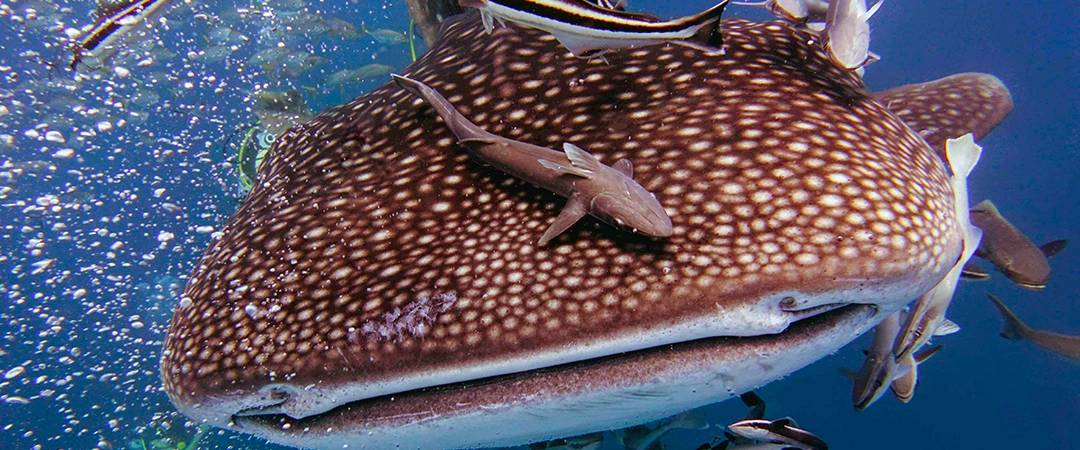
Whale sharks are filter feeders, a rare trait among sharks. Instead of hunting large prey, they swim slowly through dense patches of plankton, krill, or small fish with their enormous mouths open. Water passes through specialised gill rakers that trap tiny food particles before being expelled.
They use two main feeding techniques:
- Ram feeding — swimming forward continuously with the mouth agape, filtering water as they move.
- Vertical feeding — positioning themselves upright in the water column and sucking in clouds of plankton in powerful bursts.
Divers often witness vertical feeding at Koh Tao’s deeper pinnacles, where currents push plankton upward from the thermocline. It’s a breathtaking sight. The huge animal hovers almost motionless, its mouth wide, surrounded by a shimmering cloud of food —a defining image of a whale shark diving around Koh Tao.
Migratory Patterns
Despite their size, whale sharks are slow travellers. Satellite tagging studies reveal migrations spanning thousands of kilometres, guided by ocean currents and seasonal plankton blooms. They’re known to visit feeding grounds in the Philippines, Indonesia, and the western Indian Ocean, and the Gulf of Thailand is an important stop along that route.
We typically see juveniles and teenagers here. Individuals range between 4 and 8 metres long. Scientists believe Koh Tao may serve as a developmental habitat where young sharks can feed safely before joining adult populations elsewhere.
When Is Whale Shark Season in Thailand?
Whale shark season in Thailand varies slightly between regions, depending on ocean currents and food availability. However, experience and long-term sighting data show clear seasonal patterns for the best chances of a whale shark sighting.
Whale Shark Season in the Gulf of Thailand
The best chance to dive with whale sharks around Koh Tao usually falls within two main periods:
- March – June: Calm seas, strong sunlight, and warm water encourage plankton blooms.
- September – November: After the monsoon transitions, nutrient-rich currents return to the Gulf, creating another feeding period.
Between these windows, sightings are rarer but definitely not impossible. We’ve had surprise encounters every month of the year.
Best Dive Sites for Whale Shark Diving Around Koh Tao
If you’re planning your dives around potential whale shark sightings, these are our top sites:
- Chumphon Pinnacle – Deep granite formations surrounded by pelagic life; often the most reliable spot
- Southwest Pinnacle – Slightly shallower, ideal for advanced open-water divers.
- Sail Rock – Between Koh Tao and Koh Phangan; famous for large-fish encounters.
- Hin Wong Pinnacle – Closer to shore, with vibrant coral and fewer crowds.
Each of these sites offers a chance to experience the magic of whale shark season in Thailand, but we always remind divers that patience and persistence are key.
Whale Shark Season in the Similan Islands and Andaman Sea
While Koh Tao offers incredible encounters in the Gulf of Thailand, the Similan Islands on the Andaman coast also provide world-class opportunities to dive with whale sharks in Thailand. The whale shark season in this part of Thailand typically peaks from February to April, when nutrient-rich waters from the Indian Ocean attract plankton blooms and pelagic species.
During this time, whale shark sightings usually happen near dive sites such as Richelieu Rock, Koh Bon, and Koh Tachai, some of the most famous diving spots in Southeast Asia. Divers often combine trips between Koh Tao and the Similan Islands to experience both sides of Thailand’s marine biodiversity.
The Endangered Status of Whale Sharks in Thailand
Although whale sharks inspire excitement among divers, their global population tells a sad story. Listed as Endangered by the IUCN, their numbers have declined sharply over the past few decades.
Threats Facing Whale Sharks
- Bycatch: Whale sharks often become entangled in fishing nets or are accidentally caught in tuna fisheries.
- Vessel Strikes: Because they feed near the surface, they’re vulnerable to boat propellers and hull impacts.
- Pollution and Microplastics: As filter feeders, they ingest plastics and chemical pollutants that enter the plankton chain.
- Unregulated Tourism: In some destinations, irresponsible feeding or crowding disrupts natural behaviour.
Protection in Thailand
Whale sharks in Thailand are a protected species under national law, making it illegal to catch or harm them. Marine conservation groups and research initiatives collaborate with dive operators (like Crystal Dive) to record whale shark sightings, identify individuals through photo-ID, monitor movements, and ensure that every dive with whale sharks is safe for both divers and the animals.
We submit every confirmed sighting to the national database managed by Thailand Whale Shark Project and Ecocean’s Wildbook for Whale Sharks. Each shark’s spot pattern acts like a fingerprint, helping researchers track its travels throughout the Indo-Pacific.
Conservation is an ongoing story, and we’ll explore Thailand’s protection efforts in detail in an upcoming article, but for now, every diver can play a vital role simply by practicing ethical whale shark diving.
How We Can Support Ethical Whale Shark Diving
Ethical whale shark diving ensures that future generations of divers can continue to experience these incredible animals in their natural habitat. As divers and dive professionals, we all share that responsibility.
Responsible Diving Guidelines
- Do not touch or ride the shark because their skin is coated with a protective mucus layer easily damaged by human contact.
- Maintain a respectful distance of at least three metres from the body and four metres from the tail.
- Never chase or block the animal’s path; instead, position yourself where it can approach naturally.
- Avoid using flash photography, as bright light can disturb feeding behavior.
- Limit group size as smaller dive groups create less stress and better experiences.
At Crystal Dive, we adhere to these principles on every trip. Our instructors brief all divers before entering the water and remind everyone that observation, not interference, is the ultimate goal. Following these guidelines supports sustainable and ethical whale shark diving throughout Thailand.
Community and Citizen Science
Every diver can contribute to whale shark conservation by sharing photos of their whale shark sightings. If you capture a clear image of the left-side spot pattern behind the gills, upload it to the global ID database. We’re happy to help guests submit their images. It’s a simple way to turn your dive photos into valuable research.
Ethical tourism isn’t just about following rules; it’s about respect. When we protect the animals that draw us here, we also protect the livelihoods and ecosystems that depend on them. That’s the foundation of ethical whale shark diving.
Learn More Through Our Shark Ecology Course
A whale shark sighting is unforgettable, but understanding what you’re seeing makes it even more powerful. Our SSI Shark Ecology Course is designed for divers who want to go beyond the basics and explore the science behind sharks.
In this one-day specialty, we cover:
- Shark evolution and anatomy, and how species like the whale shark fit into the broader family tree.
- Behaviour and sensory biology, including how sharks navigate, feed, and interact with their environment.
- Conservation challenges, such as what’s threatening shark populations and how divers can help.
- Identification and research techniques, including how to record whale shark sightings responsibly.
Completing the Shark Ecology Course gives divers a deeper appreciation of these animals and the role they play in the ocean’s balance. It’s not just an educational course. It’s also an opportunity to join a community of informed, eco-minded divers.
If you’ve ever felt inspired watching a whale shark glide past, this course is the perfect next step. Knowledge truly is the key to conservation and to responsible whale shark diving around Koh Tao.
Ready to Dive with Whale Sharks in Koh Tao?
Ever dreamt of a whale shark sighting? It’s humbling, exhilarating, and reminds us of our smallness in the vastness of the ocean.
At Crystal Dive, our mission is simple: to help divers experience the ocean responsibly while protecting the marine life that makes it so extraordinary. Whether you’re a seasoned diver or taking your first breath underwater, we invite you to join us to learn, explore, and maybe (just maybe) dive with whale sharks face to face.
Book your next dive adventure to dive with whale sharks around Koh Tao or enrol in our Shark Ecology Course to learn ethical whale shark diving, and together, let’s make every encounter count, for us, for the ocean, and for the magnificent whale shark.
Not sure when to book to increase your chances of diving with whale sharks? Get in touch with us, and we’ll explain how the whale shark season in Thailand works.